- On Campus
Course Overview
Intakes
- 2026
2026 Intake
| Intake Date | Campus | Attendance Days |
|---|---|---|
| 03/08/2026 | Yallourn | Monday, Tuesday, Wednesday, Thursday, Friday 8:30am-4:30pm |
About this course
If you’re already working as a security officer or crowd controller and want to strengthen your skills and knowledge in the sector, our Certificate III in Security Operations is for you.
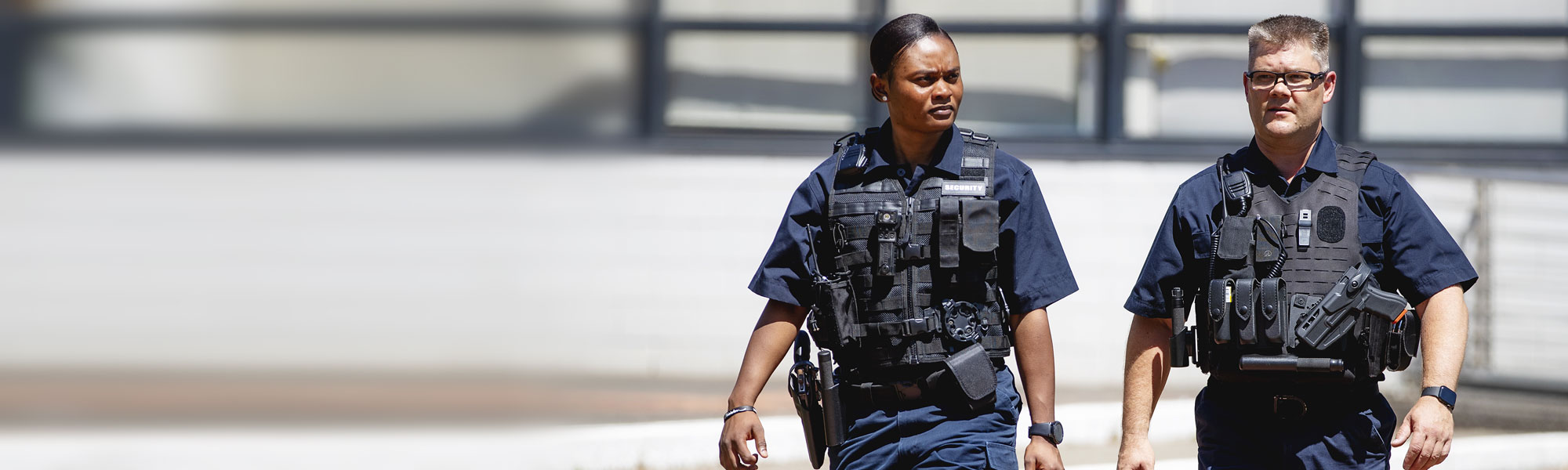
Delivered face-to-face five days a week at our Yallourn campus, you’ll learn how to provide leadership in a team environment as a security officer in a range of security environments and develop your skills and knowledge in broad security operations.
Take the lead in the field with a Certificate III in Security Operations. This qualification reflects the role of a security officer responsible for maintaining safety and security by patrolling, protecting and guarding property, and screening entry, monitoring behaviour and removing persons from premises, an unarmed guard.
This course will teach you the practical skills you need to be a security team leader and will provide a pathway to further learning and work in various security roles and settings, including security risk management.
Career Opportunities
Course Overview:
This course prepares learners for roles as Security Supervisors in various environments such as:
Mobile patrols, education centres, shopping centres
Power, gas, and mining sites
Hospitals, major events, industrial sites, and airports
While the qualification includes general security electives, it may not cover all job-specific requirements.
Skills or Knowledge gained
This qualification is ideal for individuals seeking to deepen and broaden their skills and knowledge in security operations. It provides a pathway to further learning and employment across a range of roles and environments, including opportunities in security risk management.
Security officers at this level are expected to:
Provide leadership within a team environment
Work under limited supervision
Use discretion and sound judgement in both predictable and unpredictable situations
Take responsibility for their own performance, and some responsibility for the performance of others in their team
This qualification supports career progression within the security industry and prepares learners for supervisory or specialist roles in a variety of operational contexts.
________________________________________
Entry Requirements:
Mandatory:
• Completion of Certificate II in Security Operations
• Evidence of a current Security Officer licence in the relevant state/territory
Recommended:
Interest in progressing to a supervisory role in the security industry
Limitations:
Must be medically fit for self-defence training
Should understand industry and licensing requirements set by Victoria Police
Minimum Industry Requirement:
• National Police Check
________________________________________
Licensing/Regulatory Outcome:
Yes — this qualification can contribute to a security industry licence or regulated outcome
________________________________________
Additional Training for Armed Guard / Cash In Transit (Not included in this course):
To qualify for Armed Guard or Cash In Transit licence variations in Victoria, you must also complete the following extra units (additional cost applies):
CPPSEC3116 – Carry, operate and maintain semi-automatic pistols for security purposes
CPPSEC3115 – Carry, operate and maintain revolvers for security purposes
CPPSEC3114 – Control Security Risk Situations Using Firearms
• Extra costs apply – payment plans may be available (subject to approval)
________________________________________
Important Information for Security Licence Variation – Victoria:
After completing the course and the 3 firearm-related units, you must:
• Apply to Victoria Police to add Armed Guard and/or Cash in Transit roles to your licence
• Provide a letter of employment from a licensed employer for the intended role
________________________________________
Victoria Licence Eligibility Requirements:
You must:
• Be 18 years or older
• Be an Australian resident or have a visa with work rights
• Pass a National Police Check (including fingerprinting for firearms)
• Provide International Police Checks if applicable
• Not be a prohibited person
• Be fit and proper (no disqualifying medical or legal issues)
• Complete the approved training
• Provide proof of employment for Armed Guard/Cash in Transit
• Meet handgun licence requirements for work in security
Opportunities for Further Study
CPP41519 Certificate IV in Security and risk management
CPP50619 Diploma of Security and Risk Management
Skills or Knowledge gained
This qualification is suitable for individuals who wish to deepen and broaden their skills and knowledge in security operations and lead security teams in the field. It provides a pathway to further learning and work in various security roles and settings, including security risk management.
Security officers at this level provide leadership in a team environment, operate under limited supervision, and use discretion and judgement in known and unpredictable work contexts. They take responsibility for their own outputs in work and learning, and limited responsibility for the output of others in the work team.
Entry Requirements
Are there specified requirements for entry into the course/qualification?: Yes
Mandatory entry requirements:
A completed certificate II in Security Operations with evidence of a current Security Officers licensing in the relevant jurisdiction.
Recommended entry Requirements:
Learners should have a genuine interest in progressing to a supervisory role within their existing or new work role within industry.
Limitations to course Entry:
Learners should be medically fit in order to complete the self defence tactics training and assessment. Learners should research and have a good understanding of the industry requirements, and Licencing requirements set out by the Victorian police in order to achieve an extension of licence.
Minimum Industry Requirement
- Police check
Licensing/Regulatory Requirements
Will this course/qualification or a constituent unit provide a pathway to an industry licence or regulated outcome: true
- Occupational licensing, legislative, regulatory or certification requirements may apply at the time of publication.
- This qualification does not provide the required competencies for a security officer variation to license.
-Learners who hold a security license may select units as part of this qualification or as fee for service units, required for additional license endorsements in;
- Armed Guard
- Cash-in-transit
- Batons and Handcuffs
- Combined Armed Guard and cash in transit
- Firearms
Qualifications and Recognition - 2026
Upon successful completion of this course students will be eligible to receive the Certificate III in Security Operations.
Work Placement - 2026
Does this course require placement?: No
Further Information - 2026
Fees
| Fees and charges | Government subsidised concession | Government subsidised | Full-fee paying student |
|---|---|---|---|
| Maximum full course tuition fee* (GST exempt) | $528.22 | $2,641.10 | $6,414.10 |
| Materials fee* (GST exempt) | $156.50 | $156.50 | $156.50 |
| Total | $684.72 | $2,797.60 | $6,570.60 |
VET Student Loans
Not Applicable for this course
Important information
Sample course units
Assessment
The assessment for each course varies. It may include knowledge questions, practical skills tasks, projects, research work, on the job assessment, etc. Your assessor or educator will provide specific information on the requirements for your course.
You can expect that:
- assessment methods are clear
- assessment tasks are relevant and meet the requirements of your course
- assessor or educator demonstrate fairness and lack of bias when assessing your work
- educators will provide open and honest feedback about assessment tasks.