A bricklayer is a tradesperson who works in the construction industry, using bricks, concrete blocks, stone and mortar to build and repair a range of structures. Their work includes building walls, fireplaces, partitions and archways, as well as creating decorative patterns and finishes.
To become a bricklayer, you need formal training at TAFE, which combines work placement and classroom study. Being a bricklayer is an excellent trade in high demand, with job security and good pay.
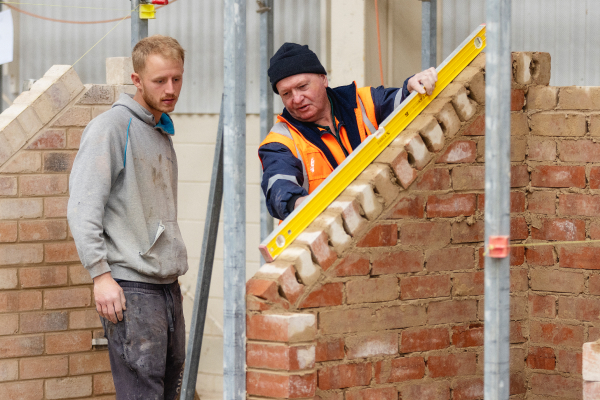
What does a bricklayer do?
Bricklayers lay bricks by hand to construct or repair walls, partitions, arches, and other structures. They may work in commercial settings or residential buildings and usually amongst a team of other construction workers. The main tasks of a bricklayer include:
- Construct and repair: Bricklayers build residential, commercial and industrial walls and structures using brick, concrete blocks, or stone.
- Layout and preparation: Part of the role is to study plans and specifications to determine the materials required and installation procedures.
- Mixing and laying: To create a binding substance to lay the bricks, bricklayers mix the mortar together.
- Cutting and shaping: Using tools like chisels, brick hammers and saws, bricklayers cut and shape bricks to specific sizes and patterns.
- Finishing: This is the final detailed task the bricklayer must do after the bricks are laid. Often referred to as ‘joining’, this part of the process involves cleaning the bricks, treating the mortar joints, and ensuring structural integrity.
How to get started as a bricklayer
To get started as a bricklayer, you must undertake some formal training as well as an apprenticeship. You do not need any bricklaying experience to qualify for the apprenticeship, although sometimes having a pre-apprenticeship certificate is helpful. The job also requires specific skills and is highly physical. These are some of the possible steps to help you become a bricklayer.
- Complete a pre-apprenticeship: A pre-apprenticeship is a course that helps you prepare for a registered apprenticeship and teaches basic skills. To become a bricklayer, the pre-apprenticeship to consider is the Certificate II in Building and Construction Pre-Apprenticeship (Bricklaying) - VDSS. This is a two-year, part-time course that works alongside VCE or VCE VM studies. Students learn foundational skills to lay bricks and masonry blocks and take part in teamwork, planning and organisational skills.
- Complete a white card certification: This is the official document that states workers have completed general safety induction training. The white card training can be completed in one day with the Prepare to work safely in the construction industry. This course meets all the requirements of General Induction Training as outlined by The National Code of Practice for Induction for Construction Work (2007).
- Secure and register for an apprenticeship: To secure an apprenticeship as a bricklayer, you must find an employer or host employer. Search for apprenticeship opportunities on platforms like SEEK or Indeed, contact the Apprenticeship Connect Australia Provider, or apply directly through company websites. Potential employers will then set up an interview with you to evaluate your enthusiasm, reliability and willingness to learn. You may even be offered a trial period on site to prove your work ability and fitness for the job. Once you have secured an employer, you can apply for an apprenticeship. The Certificate III in Bricklaying/Blocklaying (Apprenticeship) is a three-year full-time apprenticeship that includes campus attendance and on-the-job training. To apply, you need a signed agreement with an employer in the bricklaying and construction industry.
- Apply for jobs: Once you have completed your apprenticeship, you will be trade-qualified and in demand, specifically in Australia’s construction industry. You may decide to continue with your apprenticeship employer, as many apprentices are offered full-time work immediately upon completion. Alternatively, you may want to look elsewhere. If job hunting, update your resume, register with recruiters, and use the network you have gained through your apprenticeship years to look for permanent work.
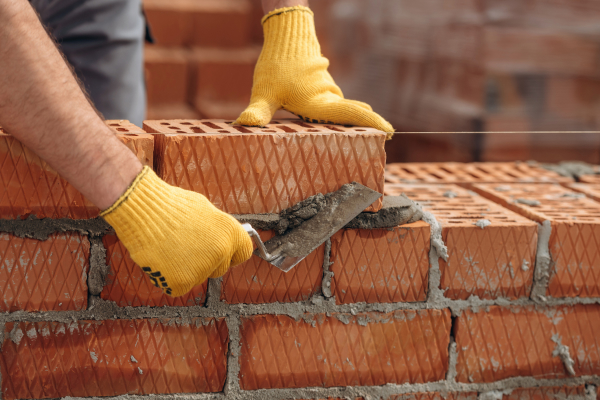
Skills and personal traits needed to be a bricklayer
To be a successful bricklayer, there are certain skills and personal traits to handle the demands of the construction industry. These include:
Physical traits
- Physical stamina: Being a bricklayer is physically demanding, so you need to have strength and stamina.
- Manual dexterity: To lay bricks precisely, bricklayers need a high level of hand-eye coordination.
- Physical dexterity: The ability to endure repetitive motions like crouching, bending over and laying bricks is essential for a bricklayer.
- Ability to work outdoors: Bricklayers have to work in hot and cold climates, often outside exposed to the elements.
Personal traits
- Attention to detail: Be able to pay meticulous attention to detail to ensure bricks are perfectly aligned and aesthetically pleasing.
- Teamwork and communication: The ability to work within a team is essential on a construction site with a variety of different trades. Communication is imperative to ensure project flow with plumbers, builders and electricians on the site.
- Enjoy manual and outdoor work: Bricklayers should be comfortable with manual and outdoor work.
Technical skills
- Brick/block laying and masonry: Must be proficient in laying bricks, stone and concrete blocks with mortar.
- Tool operation: Be skilled at using tools such as trowels, levels, hammers, brick cutting machines and cement mixers.
- Blueprint understanding: Be able to interpret blueprints and work from architectural plans and drawings. This is necessary for accurately working out area measurements and calculating material quantities.
- Understand codes and regulations: Bricklayers need a strong understanding of building codes and regulations to work on a construction site.
Where do bricklayers work?
Bricklayers work primarily in the construction industry, both outdoors and indoors. They can work on residential, commercial and industrial sites for construction companies or as independent contractors. Some bricklayers are specialists in their industry and may work on historic or heritage sites. The types of environments bricklayers can work in are:
- Residential construction: The most common type of bricklaying work is in residential construction. This is when they build homes, apartments or residential properties in suburban or metropolitan areas.
- Commercial and industrial developments: Bricklayers working on commercial and industrial developments might work on the exterior or interior of the building. In these situations, they often operate at heights on scaffolding or at ground-floor levels.
- Infrastructure projects: Sometimes bricklayers can work on infrastructure projects such as large-scale transportation, utility or public structures. This may entail constructing retaining walls, building and repairing public facilities, or building structural components for rail networks, roads or bridges.
- Restoration and preservation: Some bricklayers who specialise in restoration and preservation work focus on maintaining the structural integrity of old brickwork. This might be in historical, heritage or aged residential properties. These specialist bricklayers may restore facades of heritage buildings or perform delicate work like tuckpointing to blend new repairs with historic brickwork.
Why choose a career as a bricklayer?
Being a bricklayer is a lucrative career path with a plethora of advantages. These include:
- High demand and job security: There is a high demand for bricklayers in the construction industry, particularly for new homes and renovations. This results in exceptional job security for qualified bricklayers and a wide variety of job opportunities.
- Active, outdoor work: Most bricklaying work is outside, so this is ideal for those who want to keep physically fit and avoid inside office work.
- Creativity: Bricklaying is a creative job which involves skill, precision and artistry in building.
- Good pay: Bricklaying has excellent earning potential. Qualified and experienced bricklayers can earn a high income.
Future pathways after becoming a bricklayer
After becoming a bricklayer, there are a diverse range of career pathways you can follow in the construction industry. With experience and further training, bricklayers can transition from manual roles to supervisory, management or other construction-related positions. These include:
- Site supervisor: As a first step, bricklayers can take on leadership roles like site supervisors. The Certificate IV in Building and Construction is a one-year course to transition to a site supervisor role from a bricklaying background. This course is specifically designed for people wanting to move into roles like site manager or site supervisor.
- Registered builder: A bricklayer’s experience can provide a pathway to becoming a registered builder, which means running a construction firm, building new homes and managing other subcontractors. The one-year building and construction course at TAFE Gippsland is recommended to become fully-registered.
- Building surveyor/inspector: After being a qualified bricklayer, you have a strong pathway to a career as a building surveyor or inspector. To transition from trade to building, the best course is the Advanced Diploma of Building Surveying.
How much do bricklayers get paid?
Bricklayers get paid between $80,000 and $90,000 depending on experience and location. Experienced contractors can earn well over $120,000 per year. High-demand areas like Sydney and Perth pay up to $600 per day for a qualified and experienced bricklayer. In fact, working as a bricklayer is known as one of the highest-paid apprenticeships.
To become a bricklayer requires both hands-on skills, traits, and formal qualifications. The best way to become a bricklayer is to secure an employer and undertake an apprenticeship with TAFE. The team at TAFE Gippsland can guide you through the various pathways to starting a lucrative career as a bricklayer.