An agronomist is a specialist in soil science, plant production and ecology. These professionals advise farmers on soil health, seed selection and crop management to improve the productivity of a farm. Through education and practical experience, agronomists learn how to protect crops from pests and diseases and act as a link between agricultural research and farmers. Agronomists can work in a wide range of settings from hands-on field work in outdoor environments to data-driven laboratories and corporate facilities.
What is agronomy?
Agronomy is using science and technology to understand how crops grow and how to improve farming practices. It is the study of how to grow crops more effectively and improve soil health using research and experimental methods.
What does an agronomist do?
Agronomists advise farmers and agricultural companies on how to optimise crop production, improve soil health and implement sustainable farming practices. Known as ‘crop doctors’, agronomists are the link between farmers and researchers. They focus on understanding how crops and plants grow and interact with the environment around them. They are professionals who are experts in:
- Crop management: They monitor crops, advise farmers on planting dates, identify any diseases that need to be treated and implement new technologies.
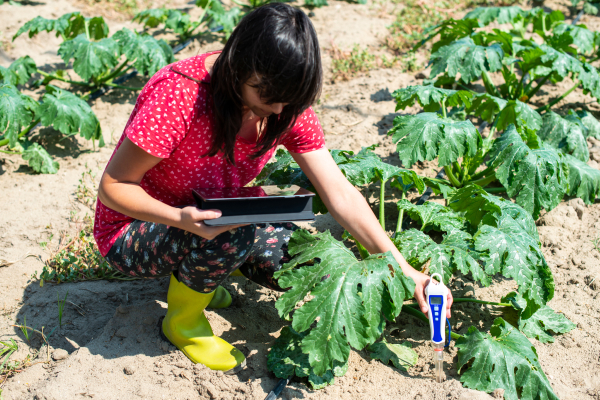
- Soil health and fertility: An agronomist will conduct soil sampling to analyse pH levels, nutrient levels and physical structure and develop tailored fertilisation programs to correct any issues.
- Research and innovation: As an agronomist, one of the roles is to research and find new scientific advancements. This may be developing new seed varieties, fertiliser types or farming techniques.
- Advisory service: With the knowledge they have learnt through study and practical experience, agronomists work directly with farmers as advisors. They may suggest certain types of crop rotation plans or how to improve soil health.
- Sustainability: Agronomists help farmers by advising them on sustainability practices. They can teach them how to optimise fertiliser and water usage, which lowers the agricultural carbon footprint.
- Data analysis: Modern agronomists use precision data to drive decision-making. They utilise GPS, remote sensors and satellite imagery to create maps for seed application. They analyse data to ensure the right management strategy for each situation and identify areas of improvement.
Areas of specialisation
Agronomists can specialise in a variety of areas of work. They can focus on specific aspects of crop production, soil health or technology. As agronomy is an interdisciplinary field, a person who specialises can tailor their expertise to everything from research to genetics and education, policy and advocacy.
- Agronomists in fieldwork and research: These professionals are often called Research Agronomists or Field Scientists. They focus on new knowledge to help farmers with crops and profitability. Fieldwork and research involve conducting experiments on crop varieties and cultivation techniques, and analysing their data. Research agronomists and field scientists use hands-on trials and technology to discover practical and sustainable farming solutions, solve problems, and enhance productivity and profitability.
- Agronomists in education and extension: These professionals translate scientific advancements and practical research into solutions for farmers. They act as a link between researchers, field scientists and people who work in the agriculture sector. A person in this role is usually known as an extension agent, educator or consultant. They provide technical advice and help educate farmers on how to implement new practices and technologies. They might work one-on-one with a farmer or conduct workshops or educational programs.
- Agronomists in policy and advocacy: This specialist field involves agronomists who develop and analyse specific agricultural policies and laws concerning land use, water usage or biosecurity. They can also represent farming interests such as those within the National Farmers’ Federation or AgForce.
Common roles of an agronomist
The most common roles of an agronomist include:
- Crop advisor/consultant: These professionals provide agronomic advice to farmers and agricultural professionals. The technical and professional knowledge of crop advisors and consultants is essential to supporting a progressive farming industry. Crop consultants are individuals who maintain a high level of skills and knowledge in spray management, product selection, crop nutrition and soils, irrigation practices, disease and weed management. They use this knowledge to provide agronomic advice directly to farmers and those in the agricultural field.
- Extension agents: Professionals who go out and educate farmers on updated techniques in things like irrigation methods or new technologies are called extension agents. These people act as the bridge between the researchers and the farmers themselves.
- Plant and soil scientist: A plant and soil scientist works in both laboratories and field settings to improve agricultural productivity, food security and environmental sustainability. Through researching the physical, chemical and biological properties of soil and plants, they gain more knowledge on crop management, soil health and nutrient efficiency.
- Agronomy manager: This is a high-level role that oversees and manages a team of agronomists or farm technicians. An agronomy manager is a leader who oversees crop production strategies, team management and technical agronomic advice to help maximise farm efficiency.
- Sales agronomist: Sales agronomists work in a sales role as well as helping farmers improve their farming methods. As a sales agronomist, these professionals go out to properties and help address issues in crop or livestock management. They may suggest products that they sell, like seeds, fertilisers or chemicals, as a solution.
How to become an agronomist
To become an agronomist, you will require hands-on experience, education such as a diploma or degree and certain skills and traits like enjoyment of the outdoors and a scientific mind. It is also advantageous to do agriculture, science or maths subjects while in high school if possible.
- High school education: If pursuing a VCE qualification, focus on some aspect of science or maths with subjects like biology, chemistry and mathematics. Agronomy relies heavily on understanding plant and soil science, and a background in these subjects can offer a solid foundation for further tertiary study.
- Start with a TAFE qualification: TAFE courses can provide practical agricultural skills and experience for a pathway into agronomy. There are a variety of TAFE courses to help you become an agronomist that offer hands-on, practical experience in the field. TAFE courses that are direct pathways to a career in agronomy are:
- Certificate III in Agriculture - The Certificate III in Agriculture is designed to offer some hands-on experience for those wanting a career in the agricultural industry. The two-year course is a nationally recognised qualification that enables individuals to select livestock production or cropping as a job focus and perform tasks within that industry. To enter this course, individuals must be employed to work on a commercial agricultural farm.
- Certificate IV in Agriculture - This course focuses on supervisory, technical and management skills, which prepares individuals to lead teams and run operations. The 40-week course is designed for those already working on a farm in some capacity and will help you develop post-trade skills and become specialists in your field. This qualification teaches students skills and knowledge in work health and safety, people management, supervision of animal health programs, development and supervision of livestock feeding, and soil and pasture improvement.
- Diploma of Agriculture - This one-year course is designed to let you work in the agriculture field of your choice. On completion, participants can work as agronomists or farm managers. The course trains in vital agricultural skills that encompass business, human resources, agronomy, animal husbandry and whole farm planning. Prior to undertaking the diploma, students are highly recommended to have completed the Certificate IV in Agriculture. To undertake this course participants must also have access to an agricultural enterprise to support their assessment completion.
- Take advantage of TAFE-to-uni pathways: If you choose to do a Bachelor's degree, TAFE Gippsland offers direct pathways to university primarily through partnership with Federation University, Swinburne and Charles Sturt.
- Gain hands-on experience: Use a traineeship through TAFE to earn while you learn. A traineeship incorporating the Certificate II in Agriculture offers practical experience in a wide range of roles such as tractor and machinery operation, building farm fences, and animal care. It is a great way to earn as you learn and a pathway to building a career as an agronomist.
- Build professional networks: Join groups like the Australian Society of Agronomy or Crop Consultants Australia. These organisations offer the opportunity to connect to peers, stay updated on industry trends and access professional development.
- Continue education at uni with a Bachelor's Degree or Master of Agricultural Science: For those wanting to specialise or advance into research, a Bachelor’s Degree or Master of Agricultural Science can provide a strong foundation. A Bachelor’s Degree focuses on advanced technical skills, sustainable farming and digital agriculture technology. A Master of Agricultural Science prepares you for a leadership role as an agronomist.

Skills and traits to be an agronomist
To be a successful agronomist, you need a blend of expertise, technical proficiency and strong interpersonal skills.
Essential skills
- Scientific knowledge: Agronomists must be well-versed in plant biology, soil science and ecology in order to assess crop health, diagnose plant disease and recommend solutions.
- Data analysis and interpretation: The ability to interpret, analyse and apply field data to make informed decisions is essential.
- Problem solving: Agronomists must have problem-solving skills. Being able to solve problems like pest infestation is essential to the success of farming operations.
- Communication: Effective communication is crucial as agronomists work closely with farmers, agriculture businesses and government agencies. They must be able to communicate complicated scientific concepts in a way that can be easily understood.
- Technical and digital proficiency: Agronomists must be confident operating agricultural technology like GPS-guided machinery. They must be proficient with the software platforms that record and report activities and have an emerging understanding of robotic systems and artificial intelligence in agriculture.
Key traits and personal characteristics
- Curiosity: Curiosity about how things work and how to fix them is a helpful trait.
- Attention to detail: To be an agronomist, having strong attention to detail will be an asset when documenting plant or soil issues.
- Adaptability: When working outdoors, the seasons and weather are constantly changing. Being adaptable to different conditions is important.
- Love for nature: Agronomists need to be passionate about nature and working outdoors. They must enjoy getting their hands dirty and prefer dynamic, outdoor work over traditional office roles.
How much does an agronomist earn?
In Australia, the average salary of an agronomist is between $85,000 and $100,000. A graduate or entry-level agronomist will earn between $60,000 and $75,000. Mid-level salaries reach about $75,000 to $100,000, while management and technical specialists can earn upward of $200,000. An agronomist’s salary is influenced by experience, expertise and even location. Remote areas often command higher salaries than more metropolitan locations.
Agronomists are vital in optimising crop management, helping farmers develop sustainable practices and enhancing soil health. There are a number of jobs you can do as an agronomist, from research and fieldwork to education and even policy-making. To become an agronomist, there are a variety of courses in agriculture at TAFE Gippsland. Contact the team to find out more about pathways towards a career in agronomy.