The beauty industry is a fast-growing and dynamic field to be involved in, and offers diverse career opportunities. From skincare and waxing to nails and hairdressing, you can enter the profession through short courses, apprenticeships or workplace training. Entering the hair and beauty sector requires understanding which specialised roles and educational pathways align with your career goals. If you are dreaming of turning a passion for beauty into a rewarding career, TAFE Gippsland has a variety of educational entry points that adapt to different schedules, budgets and career ambitions.
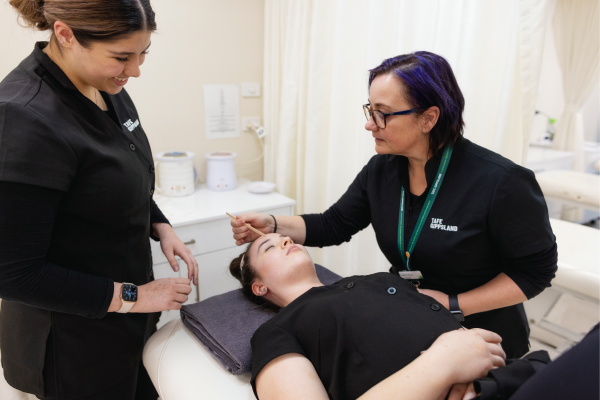
What is a career in beauty?
A career in beauty involves working as a specialist in providing services and treatments to enhance a client's physical appearance, confidence and wellbeing. Other roles involve managing salons, providing specialised medical treatments related to skin health, or advising customers about products. Careers in beauty include:
- Personal beauty services: Jobs in the personal beauty services category include makeup artists, nail technicians, hair stylists, lash and brow technicians, spray tanners, and special effect makeup professionals. Personal beauty services also include other hands-on roles like massage therapists who provide health and wellness services directly to clients.
- Skincare and aesthetics: This is really about skin health, maintenance and non-invasive treatments like laser therapy, microdermabrasion, chemical peels and hair removal.
- Medical and cosmetic treatments: This sector is advanced, non-invasive to minimally-invasive procedures which are often conducted under the supervision of medical professionals like dermatologists.
- Business and retail roles: The business and retail careers in the beauty industry typically involve managing team operations and staff, driving product sales, or sourcing products for retail.
10 beauty careers
Hairdresser
Hairdressers cut, style, colour and treat hair for their clients in a salon or home setting. Some of the duties of a hairdresser are to cut, colour, style, straighten and perm hair. Daily duties of a hairdresser include:
- Consultation and care: Hairdressers are professionals who understand hair and the science of how it works. They can offer advice on the type of shampoo and hair products you should use for the best results.
- Styling services: The main role of a hairdresser is the styling of hair, from cutting and colouring to straightening, perming, and extensions.
- Grooming: Trimming, shaving, shaping beards and moustaches.
- Specialised care: Cleaning, styling and colouring wigs or hairpieces.
- Cleaning and administration: The salon must be kept clean and tidy, instruments sterilised, and administration tasks done.
How to become a hairdresser
To become a hairdresser, you will need to complete an apprenticeship. To do that requires employment in a salon and enrolling in a Certificate III in Hairdressing. This three-year course teaches students cutting, colouring and finishing techniques for male and female clients. On average, you will need to attend TAFE one day per week for the duration of the course.
Expected salary
The expected salary of a qualified hairdresser ranges from $70,000 to $77,000. A senior hairdresser can earn up to $85,000+. When starting, the average entry-level salary is $49,000 to $58,000.
Nail technician
Nail technicians provide manicure and pedicure services, apply nail extensions and create nail art designs. They work in salons, spas, independently or as mobile technicians. Tasks of a nail technician include:
- Nail services: Providing manicures and pedicures.
- Artificial applications: Applying nail tips or extensions with gel, acrylic or dip powder.
- Nail art: Nail technicians are trained to apply special decorative designs on nails.
- Maintenance: They remove old polish, repair nails and remove enhancements.
- Skin care: A holistic approach to nail care provides nail technicians with the skills to treat cuticles, moisturise the skin and provide hand or foot massages.
- Hygiene: Sterilising tools, sanitising workstations and maintaining a clean environment is part of the job expectations.
- Client interaction and advising: Consulting with clients on preferences and advising on nail health.
- Managing the business: Taking bookings, managing appointments, handling payments and inventory management.
How to become a nail technician
Although not all places require a qualification, it is highly recommended to obtain a Certificate III in Nail Technology. Formal training means you will meet industry standards, hygiene and safety requirements. This short course teaches how to apply nail art, acrylic nail enhancements, use electric file equipment and deliver manicure and pedicure services. After graduating as a qualified nail technician, you can enter the workforce or undertake further study in the beauty industry.
Expected salary
The expected salary of a nail technician is $55,000 to $65,000 per year. Freelance or high-demand nail artists may earn more depending on the clientele or services offered.
Aesthetician
An aesthetician is a licensed skincare professional who specialises in cosmetic treatments to improve the skin’s appearance, texture and health. Aestheticians usually focus on non-invasive procedures that enhance the skin rather than medical diagnosis of conditions. Tasks of an aesthetician include:
- Skin analysis: Examining a client's skin type, conditions and concerns and recommending the best treatment.
- Facial treatments: Performing treatments like cleansing, exfoliating and moisturising. Administering specialised facials such as anti-ageing or brightening and using equipment like steamers or ultrasonic devices.
- Advanced skin treatments: Providing treatments such as chemical peels, microneedling, microdermabrasion, or laser treatments.
- Hair removal: Aestheticians remove unwanted hair through waxing, threading or sugaring and advise clients on hair growth cycles and post-treatment care.
How to become an aesthetician
To become an aesthetician, a Diploma of Beauty Therapy is highly recommended. This will teach you the comprehensive skills needed for specialised skin and facial treatment. Graduates can work in salons, spas and specialised dermal clinics. For an entry-level role, you can also choose the Certificate III or IV in Beauty Services.
Expected salary
The expected salary of an aesthetician is about $50,000 to $70,000 per year. Experienced aestheticians, particularly in dermal therapies, can earn as much as $65,000 to $85,000 plus.

Makeup artist
A makeup artist is a professional who transforms faces by using cosmetics, using advanced techniques to highlight, contour, and enhance natural beauty. Tasks of a makeup artist include:
- Client communication: Consult with clients to determine their makeup preferences and needs.
- Makeup application: Apply makeup for various occasions, including weddings, red carpets, photoshoots, and performances.
- Special effects makeup: Create character transformations for film, TV, theatre, and special effects makeup.
- Be aware of the latest trends: Stay updated on beauty trends, skincare products, and makeup techniques.
- Product recommendations: Makeup artists are the experts to provide beauty product recommendations.
- Maintain hygiene standards: Keeping strict hygiene procedures and sanitation for brushes, tools, and products is essential to prevent the spread of bacteria in a professional setting.
How to become a makeup artist
To become a makeup artist, it is important to have some training so you can learn how to apply makeup correctly in a professional capacity. Either a Certificate III in Makeup or Certificate III in Beauty Services provides foundational skills for bridal, fashion, media and retail makeup. The Certificate III in Beauty Services is taught over a nine-month period, three days a week. It teaches beauty services including makeup application.
Expected salary
The expected salary of a makeup artist is $40,000 to $80,000 per year, depending on your speciality, freelance work and bookings.
Massage therapist
Massage therapists are professionals who manipulate the body’s soft tissue to relieve pain, reduce stress and improve circulation. Massage therapists specialise in different types of massage techniques like Swedish massage, remedial massage, and deep tissue massage. They may work in spas, wellness centres, clinics, or independently. Tasks of a massage therapist include:
- Consultation: Massage therapists consult with clients to evaluate posture, movement and health history to develop customised treatment plans.
- Manual manipulation: This massage process is the application of pressure through hands, fingers, elbows or tools to relieve muscle tension and stiffness.
- Apply modalities: Massage therapists apply different techniques depending on the desired outcome. These might include trigger point therapy, deep tissue massage or reflexology.
How to become a massage therapist
To become a massage therapist, it is important to undertake a professional training program like a Certificate IV in Massage Therapy or Diploma of Remedial Massage. These courses provide the essential skills in anatomy and physiology and teach techniques for different massage modalities. Programs usually include hands-on training as well.
Expected salary
The expected salary of a massage therapist is $70,000 to $80,000 per year. Specialising in a particular area or modality increases remuneration prospects.
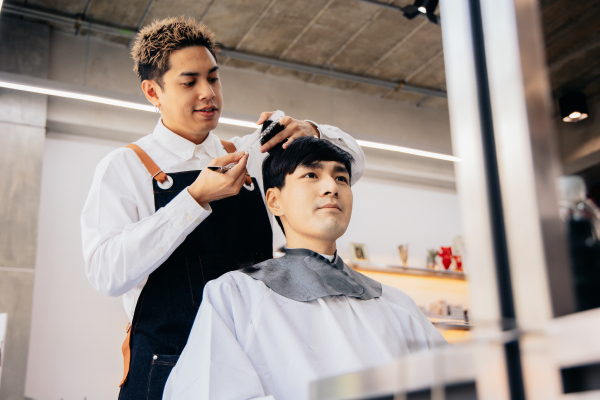
Barber
A barber is a professional who specialises in cutting, styling and grooming hair, specifically focusing on men’s haircuts and styles. Barbers are also trained to groom beards, shave, use clipper techniques, and traditional close-cut grooming. Tasks of a barber include:
- Cutting and styling: Barbers are experts in trimming, tapering and styling using scissors, razors and clippers.
- Facial grooming: Beard trims, moustached shaping and hot towel shaves are part of the facial grooming skills of a barber.
- Hygiene and safety: Part of the role is to maintain hygiene and safety in the barber shop. This means cleaning and sterilising tools and maintaining a sanitary work station.
- Administration and customer service: Managing bookings, communicating with clients, processing payments and taking care of inventory.
How to become a barber
To become a barber, you usually need to complete a Certificate III in Barbering, which is a seven to 12 month course. Apprenticeships in barbering are also a great way to become a barber, working in a barber shop three to four days a week and studying one day a week.
Expected salary
The expected salary of a barber is $70,000 to $75,000 per year depending on the level of experience. Junior barbers or apprentices will earn less than professionals with an excellent reputation who can secure higher rates.
Eyelash technician
An eyelash technician is a beauty professional also known as a lash artist. They apply semi-permanent extensions, lifts and tints to natural lashes to enhance their length, volume and curl. Eyelash technicians consult with clients about the style of lash they want, and perform lash infill and removal services. Tasks of an eyelash technician include:
- Lash application: Lash technicians apply classic, hybrid or volume extensions as well as doing lash lifts and tints.
- Consultation: Consulting with clients on the type of look they are after with their lashes, styles and volume based on their eye shape and personal preference.
- Sanitisation and hygiene: Cleaning equipment and the workplace is essential to ensure a hygienic environment.
- Aftercare education: Explaining to clients how to look after their lashes and recommending lash serums or lash brushes.
How to become an eyelash technician
To become an eyelash technician, you will need some training. There are specific courses ranging from one-day workshops to comprehensive, accredited programs covering classic, volume and hybrid techniques. TAFE Gippsland has a specific course to Apply Eyelash Extensions. In this course, you will learn how to apply eyelash extensions, remove and refill them, as well as before-and-after care.
Expected salary
The expected salary of an eyelash technician is $60,000 to $70,000 per year. Top professionals who own their own salon can potentially earn over $100,000.
Brow specialist
A brow specialist is a trained professional who shapes, styles and enhances brows using different techniques. They offer expert personalised services including mapping, waxing, threading, tinting or lamination to achieve a customised look that goes beyond basic grooming. Tasks of a brow specialist include:
- Brow mapping: Brow specialists map brows by analysing bone structure and facial symmetry to find the perfect arch and shape for each individual’s brows.
- Brow shaping: Waxing, threading or tweezing methods are used to shape brows and remove stray hairs to create the perfect shape.
- Brow tinting/henna: They apply semi-permanent dye is applied to brows to darken, define and add the illusion of fullness to the brows.
- Brow lamination: This treatment lifts and sets the brows in place for a fuller, fluffier look.
How to become a brow specialist
To become a brow specialist, it is advisable to do short courses like waxing, threading, tinting, lamination and henna. Typically, training will include brow mapping, hair structure, health and safety and client consultation. They may range from four-hour workshops to multi-day programs. TAFE Gippsland’s Brow Artistry short course covers lamination, mapping and hybrid tinting. It is a four-hour course for expertise in this area. For a more comprehensive career, consider the Certificate III in Beauty Services or Diploma in Beauty Therapy.
Expected salary
The expected salary of a brow specialist is $60,000 to $80,000 per year.
Beauty therapist
A beauty therapist is a professional who provides a variety of beauty therapies, including skin care, makeup, nail care, hair removal and holistic therapies. The roles and responsibilities of a beauty therapist include customer service as well as hands-on treatments. They often work in salons or day spas. Tasks of a beauty therapist include:
- Skincare: Beauty therapists can diagnose medical skin conditions and recommend treatments.
- Makeup: They have the skills and experience to apply makeup for special occasions and events.
- Performing facials: Facial treatments a beauty therapist may perform include cleansing, exfoliation, steaming, applying masks and moisturising to promote skin health.
- Hair removal: A beauty therapist is experienced in facial, physical and intimate hair removal through waxing treatments, threading or laser hair removal.
- Holistic treatments: Treatments using aromatherapy, reflexology or acupressure are part of the training of a beauty therapist.
How to become a beauty therapist
To become a beauty therapist, obtain a nationally recognised qualification like a Certificate III or IV in Beauty Therapy or a Diploma of Beauty Therapy from TAFE. You can also gain practical experience through apprenticeships, internships, or volunteering at salons to develop skills in facials, waxing, makeup, and massage.
Expected salary
The expected salary of a beauty therapist is between $50,000 and $80,000 per year for those with experience and advanced qualifications.
Cosmetic dermatologist
A cosmetic dermatologist is a medical professional who specialises in improving the appearance of the skin. They focus on cosmetic procedures such as laser treatments and injectables to enhance the skin's appearance. Many dermatologists specialise in cosmetic dermatology and skin rejuvenation. Dermatologists bridge the gap between medical skin health and aesthetic beauty. Tasks of a cosmetic dermatologist include:
- Anti-wrinkle injections: They may administer anti-wrinkle injections that help reduce wrinkles and fine lines.
- Dermal fillers: These are injected under the skin to restore volume.
- Laser skin treatments: Uses laser technology to treat issues such as pigmentation, acne, scars, sun damage, and unwanted hairs.
- Chemical peels: These peels remove the top layer of the damaged skin to improve skin tone and texture.
- Acne and scar treatments: Cosmetic dermatologists treat acne using medications, lasers or specialised skin treatments. They can treat scarring using advanced resurfacing techniques.
How to become a cosmetic dermatologist
To become a cosmetic dermatologist requires a medical degree, internships and residency, followed by a specialised training program with the Australasian College of Dermatologists.
Expected salary
A cosmetic dermatologist can expect to earn from $165,000 to $185,000 on average. Those in private practice or with seniority and experience can enjoy salaries exceeding $400,000 to $500,000 plus.
The beauty industry offers a wide range of career opportunities from hands-on roles such as hairdressers and beauty therapists to specialised careers like cosmetic dermatologists. TAFE Gippsland provides nationally recognised courses in beauty to help students gain the knowledge and experience needed to work in the beauty industry.